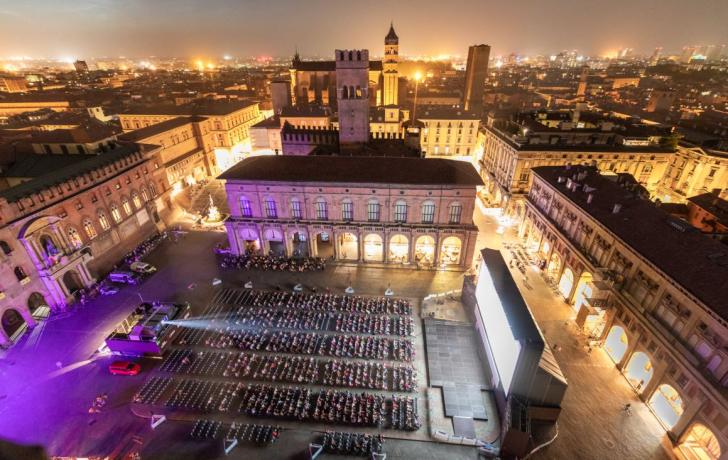
The fourth edition of the Bologna Portici Festival closed with extraordinary results, drawing as many as 40,000 visitors during its four-day run from June 4 to 7, 2026. The event, created to celebrate the city’s famous UNESCO-listed porticoes, has firmly established itself as the flagship event launching Bologna's cultural summer. It successfully connected the city center with the outskirts in a grand collective celebration that, this year, also aimed to foster deep reflection on the future of urban communities.
The program offered over forty events—all free of charge and open to everyone—captivating an extremely diverse audience. The beating heart of the festival was Piazza Maggiore, which saw sold-out crowds every evening thanks to a prestigious lineup of guests. Among the most significant highlights were the return to the city of rock star Luciano Ligabue, as part of the celebrations for the 20th anniversary of Bologna as a UNESCO Creative City of Music, and the closing concert by the "G.B. Martini" Conservatory Orchestra, conducted by Maestro Aldo Sisillo, which officially launched the upcoming edition of the Respighi Festival.
Among this year’s most successful initiatives was the introduction of the "Portici Talks", a series of debates hosted in atmospheric venues such as the Cloister of the Arena del Sole and the Courtyard of Palazzo d’Accursio. These meetings brought together prominent figures from politics, culture, and journalism to discuss crucial contemporary issues. Key moments included a debate between the Mayor of Bologna, Matteo Lepore, and the Mayor of Rome, Roberto Gualtieri (an occasion that also featured the presentation of the ALI Francesco Zanardi Awards); a tribute to the Mothers of the Republic with Regional President Michele de Pascale and author Serena Dandini; and insightful reflections by prominent journalists and thinkers like Aldo Cazzullo, Rula Jebreal, Marco Damilano, Maura Gancitano, and Corrado Formigli. The worlds of literature and philosophy were represented by acclaimed authors such as Paolo Giordano, Gad Lerner, Chiara Valerio, Emanuele Coccia, and Miguel Benasayag.
The festival also celebrated local roots and traditions by shifting its center of gravity toward Piazza della Pace. This venue saw the successful debut of "Bulåggna Sound", a traveling project dedicated to traditional dialect music that will continue across the metropolitan area in the coming months, culminating on Mid-August (Ferragosto) right in Piazza Maggiore. There was also plenty of room for traditional dancing with "Filuzzi in Piazza", which got hundreds of people moving, as well as moments dedicated to local memory. These included a tribute to the centenary of the city's stadium and the "Chiacchiere da Bar Sport" (Sports Bar Chats) at the historic Bar Billi near the Meloncello, a nostalgic homage to the stories of Bolognese writer Stefano Benni.
Great attention was paid to the younger generations with the debut of "Portici Kids": a series of workshops, shows, and games organized in Via Farini and Piazza della Pace, designed to help children discover the history of the porticoes in a fun and engaging way. On the exhibition front, visitors enjoyed several showcases, including one dedicated to the historic Aemilia Ars lace manufacture at the Civic Medieval Museum, and the "Vortici" photography project. Finally, there was overwhelming interest in the historical and archaeological guided tours, which saw over 1,300 participants across various urban itineraries, including the exclusive and highly sought-after extraordinary opening of the Bank of Italy palace.